Solemnity of Corpus Christi

The solemnity of Corpus Christi draws our hearts back to the center of our faith: Jesus Christ truly present—Body, Blood, Soul, and Divinity—in the Eucharist. In this sacrament, Christ does not merely give us something; He gives us Himself. The Eucharist is the living reminder that God desires to remain with His people, to nourish us, strengthen us, and draw us into communion with Him and with one another.

When we adore the Eucharist, we are not gazing at a symbol. We are standing before the same Christ who walked the roads of Galilee, who healed the sick, who forgave sinners, who offered Himself on the Cross. The feast of Corpus Christi invites us to renew our reverence, deepen our gratitude, and rekindle our hunger for the One who alone satisfies the human heart. It challenges us to become what we receive: a people of compassion, mercy, and sacrificial love.

This year, our diocese also prepares to celebrate the Feast of the Most Sacred Heart of Jesus on the 14th. The Sacred Heart reveals the inner life of God—a love that is tender, burning, and unending. The Heart of Jesus is not an abstract idea; it is the beating heart of the Good Shepherd who seeks the lost, comforts the weary, and pours out mercy without measure.

Corpus Christi and the Sacred Heart belong together. In the Eucharist, we receive the very Heart that loves us. In the Sacred Heart, we contemplate the love that makes the Eucharist possible. Both feasts call us to deeper intimacy with Christ and to a more generous sharing of His love with the world.

As we approach these celebrations, we might ask: Where is Christ inviting me to love more fully? To forgive more freely? To serve more joyfully? The Eucharist strengthens us for this mission, and the Sacred Heart inspires us to live it with courage and tenderness.

Our parish will honor Corpus Christi with a Eucharistic procession— inside the church right after the 10 A.M. Mass—which reminds the whole community that Christ walks with His people. It is a public act of love, reverence, and witness to the Real Presence.

During the procession, the Blessed Sacrament is carried solemnly in the monstrance. This is not just a ritual—it is a proclamation that Jesus is truly Emmanuel—God with us, moving among His people, blessing them, and inviting them to deeper faith. A procession inside the church can be especially powerful. It allows the entire assembly to remain close to the Lord, to adore Him as He passes by, and to unite their hearts in silent worship. It also reflects the truth that our parish church is the spiritual home where Christ dwells in the tabernacle and nourishes us at every Mass.

Let us Pray: Lord Jesus, present in the Most Holy Eucharist, draw us close to Your Sacred Heart. Fill us with Your compassion, strengthen our faith, and make us instruments of Your love. May Your Body and Blood nourish us, and may Your Heart guide us in all we do. Amen.

Happy Feast and Blessings of the Great Feasts to you all,

Love and Prayers,

Fr. Charley

Dedication to the Most Sacred Heart of Jesus

Fr. Charley asks us all to pray this prayer at church, at home, or wherever we are at 11 AM on Sunday, June 14.

Most Sacred Heart of Jesus, now we gather before You to dedicate each one of us to You. We believe and proclaim that You are the King and Master of our homes and our Parish. We dedicate all those who are living in this Parish. Whenever they go out and come in, You keep them safe in Your hands. Protect them from all the dangers of the world. Protect them from sudden death and from all the natural and unnatural calamities. Keep our hearts always clean and pure. Lead us not into temptation. If anybody has been in the state of sin, give him the chance to repent and come back to you as soon as possible. Please show mercy and love towards us always and at every time. May all those who have passed away from this family enjoy Your everlasting life in Heaven. Give us also the chance to be with You in Heaven after our life here on earth. All these prayers and dedications are lifted up to You, through the Most Holy Sacred Heart of Jesus Christ our Lord. Amen.

Most Sacred Heart of Jesus: Have mercy on us (recite 3 times)

Immaculate Heart of Mary: Pray for us
Saint Joseph: Pray for us
Mary, Queen of the Universe: Pray for us
Mary, Help of Christians: Pray for us.
Jesus, Meek and Humble of Heart, Make our hearts like Yours.
May the Most Sacred Heart of Jesus protect us and keep us safe always within His heart.

The Most Holy Trinity

The mystery of the Holy Trinity—Father, Son, and Holy Spirit—is the heart of our Christian faith. It is not simply a doctrine to be studied but a relationship to be entered. God is not solitary; God is communion. The Trinity reveals that love is the very essence of God’s being. The Father creates, the Son redeems, and the Holy Spirit sanctifies—three divine Persons, one eternal God, united in perfect love.

When we make the Sign of the Cross, we profess this mystery. When we pray, serve, forgive, and love, we reflect the Trinity’s life within us. We were created in the image of a God who is relationship, which means we are made for communion—with God and with one another. The Trinity invites us to live not for ourselves but in self‑giving love, just as the Father, Son, and Spirit pour themselves out for the salvation of the world.

The Holy Trinity also reminds us that God is always near. The Father watches over us, the Son walks beside us, and the Holy Spirit dwells within us. In moments of joy, God celebrates with us; in moments of suffering, God strengthens us; in moments of confusion, God guides us. The Trinity is not far away—it is the divine presence woven into every moment of our lives.

As we honor the Trinity this week, our parish also gathers in prayer and devotion, living out this communion of love. On Friday, June 5, we come together before the Lord in the Blessed Sacrament beginning at 11 AM for adoration. In the spirit of the healing love of the Trinity, we will celebrate a Healing Mass with the Anointing of the Sick, followed by lunch in the Parish Hall, sharing fellowship as one family in Christ.

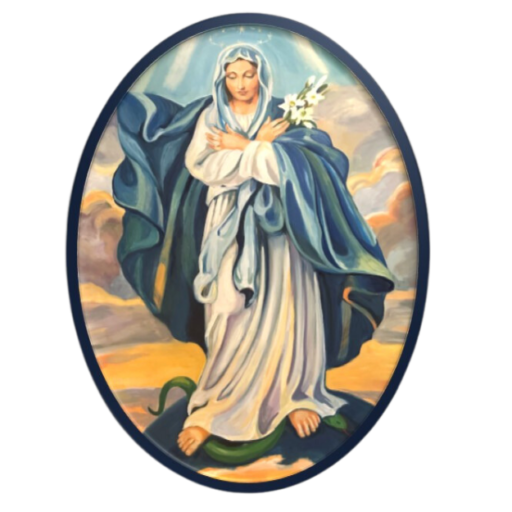
On Saturday, June 6, we honor Our Blessed Mother—daughter of the Father, mother of the Son, and spouse of the Holy Spirit. We begin with 7:30 AM adoration and the rosary, followed by 8 AM Mass, entrusting ourselves to her intercession as she leads us ever closer to the heart of the Trinity. In these gatherings, we do not simply attend events—we enter into the life of God, who draws us together in unity, healing, and grace.

Let us Pray: Most Holy Trinity—Father, Son, and Holy Spirit—draw us into Your perfect love. Make our parish a reflection of Your unity and peace. Bless our worship, our healing, and our devotion to Mary. Guide us always to live as Your children. Amen.

Love and Prayers,

Fr. Charley

Seven Amazing Facts about Mary

Seven Amazing Facts about Mary, the Mother of Jesus

Opinion by Mark Creech

January 2026

Mary, the mother of our Lord, occupies a complicated place in today’s world. In some Christian traditions, especially Roman Catholicism, she is elevated beyond what Scripture supports.

Protestants, reacting to such excess, often go too far the other way – affirming her role but rarely dwelling on the remarkable faith and courage she demonstrated. Secular and pop culture further reduce her, turning her into a seasonal decoration, a sentimental symbol, or a stylized icon stripped of theological weight.

But Scripture gives us a far richer portrait. Mary was not a fragile figurine in a nativity tableau; she was an actual young woman awakened to the staggering light and responsibility of divine revelation.

Mary deserves neither exaggerated veneration nor casual neglect. She deserves careful reflection, for in her life we see how God forms His servants through mystery, interruption, and humble faith.

From her example emerge seven timeless truths that continue to speak with clarity and strength to the Church today.

  1. God’s purposes can be disruptive, but surrender is the right response

Mary entered life expecting the ordinary path of any young Jewish woman: a betrothal, a marriage, a home in Nazareth, and the quiet rhythms of village life. But nothing about her calling allowed for normalcy. From the moment the angel Gabriel appeared, her future was swept up into a divine direction that overturned all of her expectations. She would conceive before marriage, by the Holy Spirit, as a virgin, and she would also live under the shadow of what would be perceived as scandal. The life she had imagined entirely vanished but surrender to God was the right response.

However, the disruptions she experienced didn’t end there. Instead of giving birth surrounded by family, she traveled to Bethlehem and delivered her Son in a filthy, smelly stable. Instead of settling into peaceful domestic life, she fled to Egypt as a refugee. Instead of the ordinary and relatively quiet life, she carried the profound weight of prophetic mystery. Mary had to surrender her maternal hopes to God’s higher purposes. At Calvary, she faced a mother’s sorrow that defies language and stretches beyond the reach of tears. Still, unbeknownst to her, Mary’s sorrows lay at the very center of the world’s redemption.

It is not difficult to imagine how, at times, she must have longed for the simplicity of everyday life. Yet service to God often entails the high cost of sacrifice, and Mary bore it with a quiet, steady trust.

  1. God often chooses the young to accomplish what the old believe is impossible

Mary was very likely a teenager, young, inexperienced, and still forming her understanding of the world. Yet God placed upon her shoulders a calling as old as creation itself and the great promise made after humanity’s fall. She would bear the Messiah, the Son of the Most-High. By the world’s standards, she definitely didn’t have the credentials expected, not the age, not the influence, not the training, not the status. But she had something far rarer: a heart willing to believe God simply because He had spoken.

Her story reminds us that spiritual maturity is not necessarily measured by years but by responsiveness to God. Scripture is full of such patterns. God called Samuel when he was still a boy, sleeping near the ark; Eli, aged and experienced, could barely recognize the voice the child Samuel was hearing so clearly. David was an overlooked shepherd youth when God anointed him king, even as his older brothers were passed over. Josiah was only 8 years old when he began to reign in Judah, yet his heart turned more fully toward God than many kings before him — kings who had decades of experience behind them.

Years alone do not produce spiritual wisdom, nor does youth always disqualify it.

Mary received the angel’s announcement not with hardened skepticism, as those seasoned by life are often tempted to do. Instead, Mary responded with the trusting openness of someone whose heart hadn’t yet learned to doubt the power and possibilities with God.

  1. Submission to God may invite lifelong misunderstanding and suspicion

From the moment the angel Gabriel appeared, Mary understood what the price of obedience might cost her. A virgin betrothed, but not yet married, found to be pregnant: such news would undoubtedly provoke whispers, raised brows, and quiet conversations behind closed doors. She knew this.

The angel didn’t promise her an easy path; he simply declared God’s will. Nonetheless, Mary, pure in heart and exemplary in devotion, accepted the divine calling, essentially saying, “Yes, Lord, whatever you say I will do” (Luke 1:38). She was fully aware that her reputation might never recover in her neighbors’ eyes.

But Heaven knew the truth, and she bore this burden willingly. Of course, God Himself had vindicated Mary through the angel’s announcement, Joseph’s dream, Elizabeth’s Spirit-filled blessing, Simeon’s prophecy, and the very unfolding of redemption.

Nevertheless, through all the tongue-wagging, Mary had to hold on tenaciously to what she knew was the truth, and that her worth wasn’t determined by those who trafficked in speculations. Her value, her significance, was determined by the God who chose her, called her, strengthened her, and honored her.

Mary’s life teaches us a sobering truth: obedience may cost us our reputation, but it never costs us our worth.

  1. God entrusts His greatest mysteries to those willing to live with them

Mary carried mysteries no one else on earth shared — the incarnation growing within her womb, the prophetic words spoken about her Son, the paradoxes she witnessed in His childhood. Twice, Luke tells us she “pondered these things in her heart” (Luke 2:19), holding truths she could not yet explain, promises she could not yet trace, and revelations she could not yet comprehend. God did not ask Mary to understand everything; He asked her to carry everything with faith until He revealed more.

William Cowper has beautifully written:

“God moves in a mysterious way

His wonders to perform;

He plants His footsteps in the sea,

And rides upon the storm.”

Scripture is filled with this pattern. Abraham lived for decades with God’s promise of a son before His plan blossomed into Isaac. Joseph carried the meaning of his dreams through the dark corridors of slavery and prison until God raised him to Egypt’s throne. Daniel received visions so mysterious that he was told to seal them up for a future time. Even the apostles walked in uncertainty until the resurrection illuminated what Christ had been teaching them all along.

A true story beautifully illustrates this. Corrie ten Boom, imprisoned in Ravensbrück Concentration Camp during the Holocaust, faced horrors that the human mind finds difficult to reconcile with faith. Yet she held onto a quiet phrase her father once told her as a child: “Corrie, when you go to travel on the train, I don’t give you the ticket until just before you board. God does the same. He gives us what we need when we need it.”

Mary lived in a similar trust. She did not demand answers. She did not protest the obscurity of God’s ways. She carried the mystery until light broke upon it. Her life reminds us that the deepest works of God are often understood only in hindsight, and sometimes only after we enter eternity.

  1. God honors those who worship before they receive all the answers

Mary’s Magnificat is one of Scripture’s most exquisite expressions of praise to God, but one reason it’s remarkable is because of the time she chose to sing it. She magnified the Lord before Christ was born, before prophecies were fulfilled, before her reputation was restored, and before she understood the road of suffering that lay ahead of her. Her worship rose not from circumstances, but from her confidence in the goodness of God. She praised Him while the future was still veiled, trusting that the God who had spoken would also accomplish His Word.

Mary could worship like this because she knew the Scriptures. Though she did not possess personal scrolls as we do our Bibles today, she had hidden God’s Word in her heart.

Mary shows us that true worship springs from a heart steeped in the Scriptures — the Word of God. She trusted God enough to praise Him even while His purposes, in many respects, were not fully explained or understood to her.

Moreover, if Mary had lived in our own time, we would no doubt find her regularly with an open Bible on her lap and in the Lord’s house every Lord’s Day.

  1. God often allows faithful servants to witness His unfolding redemptive plan

Mary’s life spans two of history’s greatest moments. She was present at the birth of Jesus — the moment when the eternal Son of God entered the world in human flesh. She cradled the Savior, whose coming had been foretold for centuries. Yet her story continued.

Scripture tells us that Mary was also present in the upper room after the ascension of Christ (Acts 1:14), praying with the disciples as they waited for the promised Holy Spirit. She stood at Pentecost, witnessing the birth of the Church, the beginning of Christ’s saving work spreading to the nations.

How remarkable! How glorious.

Few lives have bookended such monumental works of God. From the manger in Bethlehem to the outpouring of God’s Spirit in Jerusalem, Mary watched redemption unfold in both its personal and global dimensions. She saw Jesus come into the world as Savior, and she saw His Spirit come into the world to gather a people for His name — a people from every nation, tribe, and language.

Mary reminds us that walking with God is not only about obedience in the moment, but it is also about staying faithful long enough to see His work grow and fully bloom, sometimes in ways far larger than ever imagined.

Mary was blessed to witness the Savior’s birth and the birth of the Church with her own eyes. It can be amazing where a consistent walk of faith will take us.

  1. God reveals His salvation only to those who walk with Christ

Mary lived with a truth no other mother has ever known: the Son she nursed, taught, and loved was also her Savior and the Redeemer of her soul. Gabriel’s announcement made this clear from the very start: her Child would be called “the Son of the Most High,” the one whose Kingdom would never end (Luke 1:32-33). Mary understood from the outset that the baby within her was no ordinary child. He was the promised King of kings and Lord of lords. Mary lived every moment of motherhood with this dual awareness: Jesus was her Son, and yet infinitely more. She touched the hands that fashioned the stars; she cradled the One who would one day carry the sins of the world.

Mary’s life reminds us that knowing Christ on a personal level — knowing Him as Savior and Lord — brings peace, joy, and awe. To know Him truly is to recognize that He is not only the answer to the world’s need, but a personal Savior to anyone who trusts Him for the forgiveness of sins. Mary treasured this truth from Christ’s birth to His resurrection, and her example calls us to hold Christ in the same wonder-filled devotion, with a heart that bows before Him and says, “My Lord and my God” (John 20:28).

Though centuries have passed, the timeless truths drawn from Mary’s life remain undiminished in their relevance. They call us to trust God when our plans collapse, to believe God with a childlike faith, to endure misunderstandings with grace, to carry God’s mysteries with patience, to worship Him before the answers come, to stay faithful across the changing seasons of life, and to walk closely with Christ as our Savior and Lord.

Mary does not point us to herself, but to the God who does wonders through humble and willing hearts.

May her example lead us to say, with sincerity and courage, the very words she spoke at the beginning of her journey:

“Behold the handmaid of the Lord; be it unto me according to Thy word” (Luke 1:38).

Pentecost!

The heart of Pentecost is simple and sweeping: the Holy Spirit descends not as an idea, but as a living fire that transforms ordinary people into bold witnesses of Christ.

Pentecost reminds us that the Church is not a human project held together by strategy or strength. It is born from the breath of God. The same Spirit who hovered over creation, who spoke through the prophets, who overshadowed Mary, now fills the disciples—and us—with divine life.

The Spirit arrives as wind and flame—signs of movement, purification, and power. Wind disrupts what is settled; fire burns away what is false. Pentecost is not comfortable. It is God stirring His people into mission.

What Pentecost means for us today:

• The Holy Spirit is not distant. He dwells within us, guiding, strengthening, and consoling.
• The Church’s mission continues through our words and actions, just as it began in the Upper Room.
• Spiritual gifts are given not for personal glory but for building up the Body of Christ.
• Unity in diversity is a hallmark of Pentecost: many languages, one message; many people, one Spirit.

Pentecost challenges us to ask: Where is the Spirit inviting me to speak, to forgive, to serve, to love more boldly? The Spirit does not erase our fears, but He empowers us to move through them. He does not demand perfection, only openness.

The same fire that descended on the apostles seeks a place in us. When we allow the Spirit to work, our lives become signs of God’s presence in the world—quietly, steadily, sometimes unexpectedly. Pentecost is not a past event; it is a present invitation.

Let us Pray: Come, Holy Spirit. Fill our hearts with your fire and renew in us the joy of the Gospel. Make us instruments of peace, courage, and compassion. Guide our steps, strengthen our faith, and send us forth to bear witness to Christ in all we do. Amen.

Love and prayers,

Fr. Charley

The Solemnity of the Ascension of the Lord

The Solemnity of the Ascension of the Lord invites us to contemplate one of the most beautiful mysteries of our faith: Jesus returning to the Father, not to leave us behind, but to lift humanity to a new dignity. The Ascension is not an ending—it is a beginning. Christ rises to heaven so that we may follow where He has gone, and so that the Holy Spirit may come to strengthen the Church.

In the Gospel, Jesus commissions His disciples to preach, baptize, and witness to the Good News. This mission is not only for the apostles; it is entrusted to every believer. The Ascension reminds us that our faith is not passive. We are called to be active witnesses—through charity, forgiveness, and courage—bringing Christ’s presence into our families, workplaces, and communities.

The Lord’s departure also teaches us hope. Jesus does not abandon His people. Instead, He promises, “I am with you always.” His presence continues in the Eucharist, in Scripture, in the Church, and in every act of love. The Ascension lifts our eyes beyond the struggles of this world and reminds us that our true home is with God. Heaven is not a distant dream—it is the destiny Christ has opened for us.

As we celebrate this feast, may we renew our trust in God’s plan. Like the apostles, we may not always understand the path ahead, but we walk with confidence, knowing that Christ intercedes for us at the right hand of the Father and sends the Holy Spirit to guide us.

Let us Pray: Lord Jesus, as You ascended into heaven, lift our hearts to seek what is above. Strengthen us with the Holy Spirit, that we may be faithful witnesses of Your love. May our lives reflect Your glory until we join You in the fullness of the Father’s kingdom. Amen.

With love and prayers,

Fr. Charley

I Will Not Leave You Orphans

“I will not leave you orphans.” With these tender words, Jesus speaks directly to the deepest human fear: the fear of being abandoned. As He prepares His disciples for His departure, He does not promise a life free from struggle, but He promises something far greater—His enduring presence through  the Holy Spirit.

This Gospel reminds us that Christian faith is not about following a distant God. It is about living in relationship with a Lord who remains close, who accompanies, who consoles. Jesus knows the fragility of the human heart. He knows how easily we feel alone, overwhelmed, or forgotten. And so, He assures us: you are not abandoned; you are not on your own; I am with you.

The Holy Spirit, the Advocate, is the living presence of Christ within us. He is the quiet strength that helps us choose love when anger feels easier, forgiveness when resentment seems justified, and hope when despair whispers loudly. The Spirit teaches us to see God’s hand in ordinary moments—through the kindness of others, the peace found in prayer, the courage to do what is right.

Jesus also links love with obedience: “If you love me, you will keep my commandments.” This is not a demand but an invitation. Love naturally expresses itself in action. When we keep His commandments—especially the command to love one another—we make space for His presence to dwell within us. We become living signs that God has not abandoned the world.

In this Easter season, we are reminded that the Resurrection is not only a past event but a present reality. Christ lives. Christ remains. Christ sends His Spirit so that we may never walk alone.

Today, let us hear His promise personally: in moments of fear, He is our peace; in moments of confusion, He is our guide; in moments of loneliness, He is our companion. Truly, He has not left us orphans.

Jesus will not leave us alone. He won’t make us children of God in Baptism only to leave us “orphans,” He assures us in today’s Gospel. We remain in this grace so long as we love Christ and keep His commandments. And, strengthened in the Spirit whom Jesus said would be our Advocate, we are called to bear witness to our salvation—to the tremendous deeds that God has done for us in the name of His Son.

Let us Pray: Lord Jesus, you promised that You would not leave us orphans. Send Your Holy Spirit to strengthen our hearts, guide our steps, and remind us that You are always nearby. Help us to love as You love, to live as Your disciples, and to trust in Your constant presence. Remain with us, Lord, today and always. Amen.

With love and prayers,

Fr. Charley

I Am the Way, the Truth, and the Life

By His death, resurrection, and ascension, Jesus has gone ahead to prepare a place for us in His Father’s house. His Father’s house is no longer a temple made by human hands. It is the spiritual house of the Church, built on the living stone of Christ’s body. As Peter interprets the Scriptures in today’s Epistle, Jesus is the “stone” destined to be rejected by men but made the precious cornerstone of God’s dwelling on earth.

“I am the way, the truth, and the life. No one comes to the Father except through me.” These words from Jesus are not merely a statement of identity—they are an invitation. In the midst of uncertainty, fear, and the many paths the world offers, Jesus speaks with clarity and tenderness. He does not simply show the way; He is the way. He does not merely teach truth; He is the truth. He does not just give life; He is the life.

To say that Jesus is the way means that our journey to God is not a maze of rules or a test of perfection. It is a relationship. We walk toward the Father by walking with Christ—imitating His compassion, trusting His guidance, and allowing His love to shape our choices. When we feel lost or overwhelmed, this Gospel reminds us that the path is not hidden. It is a person who walks beside us.

To say that Jesus is the truth means that in a world filled with conflicting voices, He remains the steady center. His truth is not cold doctrine but a living reality—revealed in mercy, forgiveness, and the dignity of every person. When we anchor ourselves in His truth, we learn to see the world as God sees it.

To say that Jesus is the life means that real, abundant life is found not in success or comfort but in communion with Him. His life flows into ours through prayer, the sacraments, and acts of love.

Today’s Gospel calls us to trust. Jesus assures us that He prepares a place for us, and that He Himself will lead us there. Our task is simple but profound: stay close to Him. Walk His way. Live His truth. Receive His life.

With love and prayers,

Fr. Charley

Jesus, the Gate for the Sheepfold

In the Gospel, Jesus offers one of His most tender and protective images: “I am the gate for the sheep.” At first glance, it seems simple, even rustic. But for the early listeners, this image carried deep meaning. In ancient sheepfolds, the shepherd himself would lie across the opening at night. His body became the gate—nothing harmful could enter, and no sheep could wander off without passing over him. The shepherd’s very presence was the protection.

When Jesus calls Himself the gate, He is telling us that He is the way into safety, belonging, and abundant life. He is not a barrier but an opening—an invitation into the Father’s love. Through Him we enter a place where we are known, cherished, and guarded. In a world filled with competing voices, false promises, and spiritual noise, Jesus stands as the one true entrance into peace.

But Jesus is also the gate that leads us outward. Once we have entered His love, He sends us forth to pasture—to live, serve, and bear witness. The Christian life is not meant to be lived behind walls of fear. It is a life of movement, guided by the Shepherd’s voice, nourished by His grace, and strengthened by His Spirit.

This image is especially meaningful as we approach Confirmation on the 29th. Our young people are preparing to step more fully into the sheepfold of Christ and to walk confidently through the gate into their mission. The Holy Spirit will seal them, strengthen them, and guide them. They are not alone. Christ stands at the gate of their lives—protecting, calling, and sending. May they learn to recognize His voice above all others. May they trust that wherever He leads, life in abundance awaits.

May First is the First Friday of the Month—Adoration at 11am, Holy Mass/Anointing of the Sick at 12 noon, and following is the lunch served by the St. Andrew’s Table group. May 2nd is First Saturday, which is dedicated to Our Blessed Mother—7:30 am Adoration/Rosary and 8 am Mass.

Let us Pray: Lord Jesus, our Good Shepherd and the Gate of the sheepfold, draw us into the safety of Your love. Guard our hearts from all that harms, and lead us into the fullness of life You promise. We lift up all those preparing for Confirmation on the 29th. Fill them with Your Spirit, strengthen their faith, and guide their steps. May they always hear Your voice and follow You with courage and joy. Amen.

Love and Prayers,

Fr. Charley

Stay with Us Lord

The heart of today’s celebration is the quiet, transformative moment when the risen Christ walks beside the disciples on the Road to Emmaus. They are discouraged, confused, and unable to recognize Him. Yet Jesus draws near, listens to their disappointment, and gently opens the Scriptures. Only in the breaking of the bread do their eyes finally open. The story is a reminder that Christ often walks with us unnoticed, especially in moments of uncertainty. Recognition comes when our hearts burn with
renewed hope and when we gather at the Eucharist, where He reveals Himself again and again.

This coming Saturday we also honor St. Mark the Evangelist, whose Gospel is the earliest and most direct proclamation of the Good News. Mark writes with urgency, clarity, and conviction, echoing the Emmaus moment: the risen Christ is not distant but alive, active, and always going ahead of us. Mark’s bold witness invites us to proclaim Christ not only with words but with the authenticity of our lives.

Together, Emmaus and Mark teach us that faith grows through encounter—encounter with Scripture, with the Eucharist, and with the mission Christ entrusts to us. Like the disciples, we are sent to announce what we have seen and heard: that Christ is truly risen and walks with His people.

In every Eucharist, we reenact that Easter Sunday at Emmaus. Jesus reveals Himself to us in our journey. He speaks to our hearts in the Scriptures. Then at the table of the altar, in the person of the priest, He breaks the bread. The disciples begged Him, “Stay with us.” So, He does. Though He has vanished from our sight, in the Eucharist—as at Emmaus—we know Him in the breaking of the bread.

Let us Pray: Lord Jesus, open our eyes to recognize Your presence in our daily journey. Kindle in us the fire of Your Word and nourish us with Your Body and Blood. Through the intercession of St. Mark the Evangelist, make us faithful witnesses of Your Gospel. Strengthen our steps, deepen our hope, and send us forth with joy. Amen.

With love and prayers,

Fr. Charley