God’s Time Is the Best Time

Abraham is described in the Bible as the “Father of Faith.” He is also known as the father of the multitude. He and his wife Sarah had no children even though they were old. When Abraham was 72 years old, God appeared to him and promised him a son. He had to wait 25 years for that promise to be fulfilled.

Jacob was the son of Isaac. Jacob’s son Joseph was sold to slave traders because of the jealousy of his brothers and was later unjustly imprisoned. After his release, Joseph became an officer under Pharaoh of Egypt. But for that he had waited a long time.

Moses was the leader God sent to deliver the Israelites from slavery in Egypt. However, it took Moses 40 years to lead them from Egypt to the land of Canaan. At the same time the book of Deuteronomy states that they had to travel a distance that could be covered in two weeks (Deut.1-2).

When David was very young, the prophet anointed him as king at God’s direction. However, it was 15 years later that David became the king of Judah. He had to face many challenges, and he had been king of Judah for seven and a half years before he was able to become king of Israel.

So, when we look at the cases of Abraham, Joseph, Moses, and David, all waited for many years for God’s promise to be fulfilled. Did they have much patience for that? Of course NOT, but they must have been very stubborn without knowing God’s ways, because they fulfilled the promise in life.

Now look at our lives. We all have many needs of one kind or another. We constantly pray to get them all fulfilled. We often get upset when the things we need do not arrive at the right time. As a result, our faith itself may weaken. We even fall behind in our prayer lives.

We have to remember a few things here. One of them is that God’s timing is not like our timing. We look at our lives as a whole and prioritize things accordingly. Then we need to leave the things we pray for to God’s decision. At the same time, we must continue to pray without losing faith—let us trust in God.

The second thing to remember is that God is always at work in us, even when we do not experience it. Similarly, He protects our interests even when we cannot see them. Let’s not forget that God’s plan for us is very special. If we live our lives trusting in the Lord, our waiting will never be in vain. We will know the joy of waiting to know God’s plans for us through prayer.

Waiting will prepare us to be strong in faith, strong in love, and ready to walk the path of God. Don’t be discouraged if it seems like God is delaying something. Don’t be discouraged when unexpected things happen in our lives. Pray for the strength to face them, because the Bible says: “For to those who love God, to those who are called according to his purpose, all things work together for good.” The best time for us is the time that God has set for each one of us. Let us wait for that time of God. That is, not looking at our clock—let us focus on God’s Heavenly clock.

God bless us all,

Fr. Charley
It Takes Courage to Live a Life of Faith in This World

Why do we celebrate Saints Peter and Paul together? It’s because they were the two principal pillars of the early Church. Certainly, Jesus has always been the foundation stone, but Peter and Paul were instrumental in establishing the early Church.

St Peter was Jesus’ first disciple, our first Pope and the Apostle to the Jews. He knew Jesus personally. St Paul, however, didn’t physically meet Jesus, and as a Pharisee he initially hated and even persecuted the Christians, but after his miraculous conversion he became the Apostle to the Gentiles. He played a major role in reaching out to non-Jews, and 13 of the 27 letters in the New Testament have been attributed to him.

Peter and Paul were very different in upbringing and in temperament. Peter was born in Bethsaida, a fishing town near the Sea of Galilee. He came from a very modest background and was described as ‘uneducated and ordinary’ (Acts 4:13). He was a fisherman by trade. He was impetuous and often spoke from his heart rather than his head.

Paul, on the other hand, was born into a wealthy merchant family in Tarsus, in today’s Turkey. He was a Roman citizen and well educated (Acts 22:3). He was a tentmaker by trade and very good with words, but his personality was fiery and he could be argumentative. According to early Church Tradition, Peter felt unworthy to die in the same way as Jesus, so he was crucified upside down. The location was in the courtyard just to the left of St Peter’s Basilica today. Paul was beheaded just outside Rome, at a place now known as Tre Fontane, or ‘Three Fountains.’

Peter and Paul were very different people, but they had one thing in common: their great love for Jesus. They were so committed to Jesus and his work that they were prepared to die for him.

They teach us that our weaknesses and past mistakes don’t disqualify us from doing great things for God. Both men had done stupid things, and yet God still chose them to do his work. Clearly, no one is beyond redemption. St Peter and St Paul teach us that it takes courage to live a life of faith.

Yes, my dear brothers and sisters in Jesus Christ, now it is our turn to show the world—to stand faithfully in the sufferings and persecutions of our daily lives proclaiming Jesus to the world around us. We shall pray to Jesus to help us and to give us the strength to stand strong in our Faith always. Make sure in our hearts that in all situations of our lives “Jesus Is with Us.”

God Bless us all,

Fr. Charley

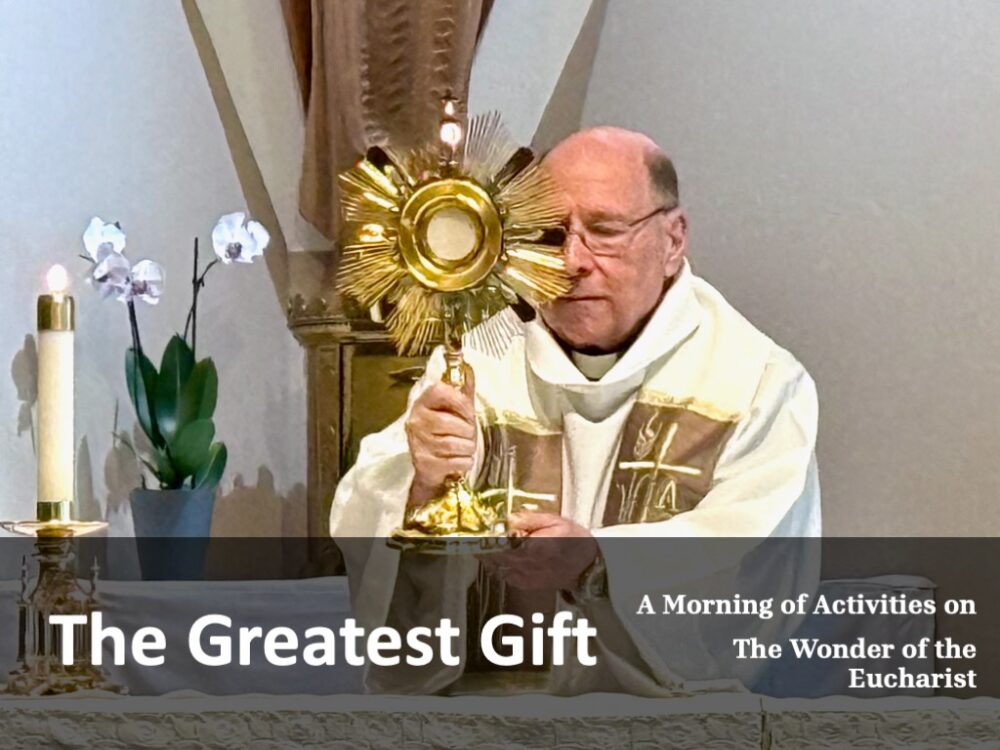
The Greatest Gift

The Greatest Gift

June 4, 2025

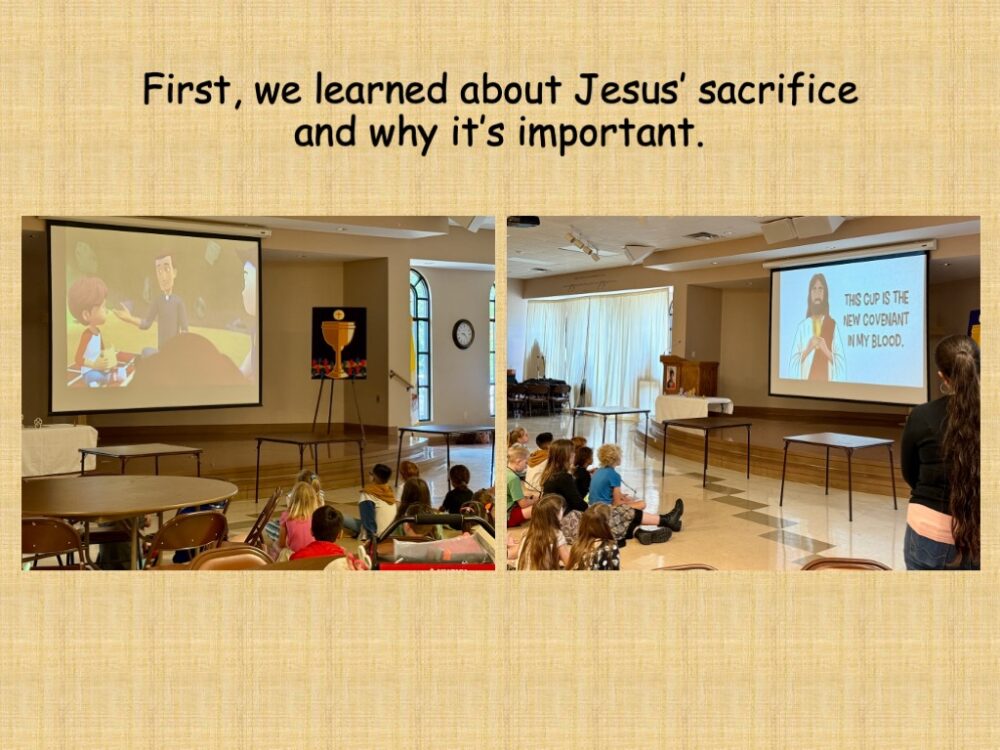
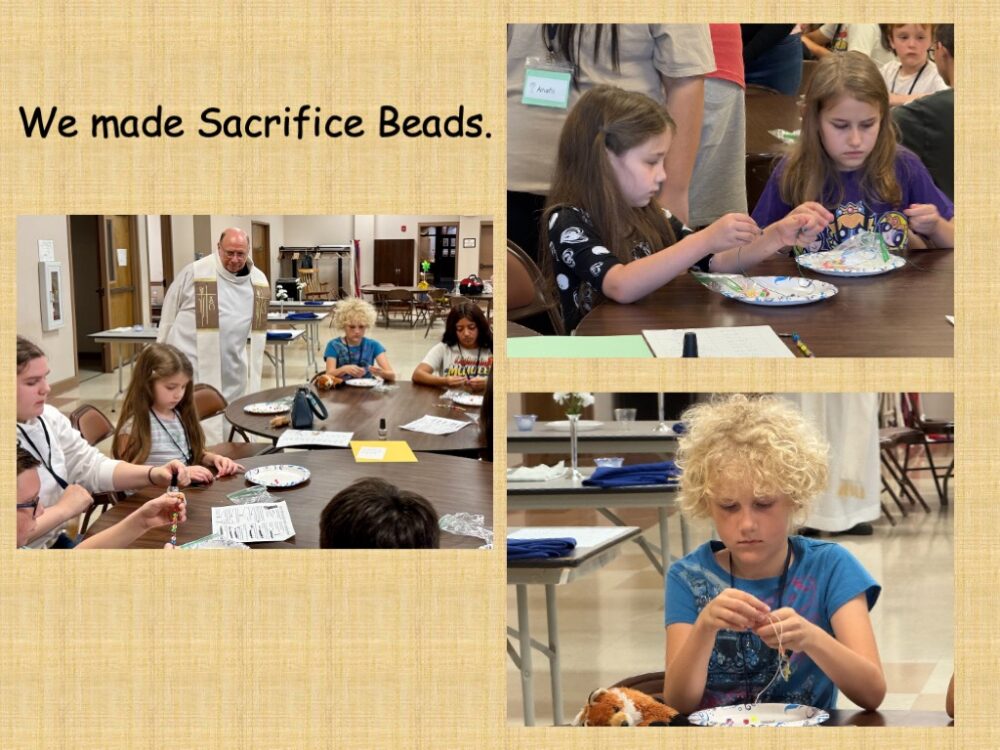
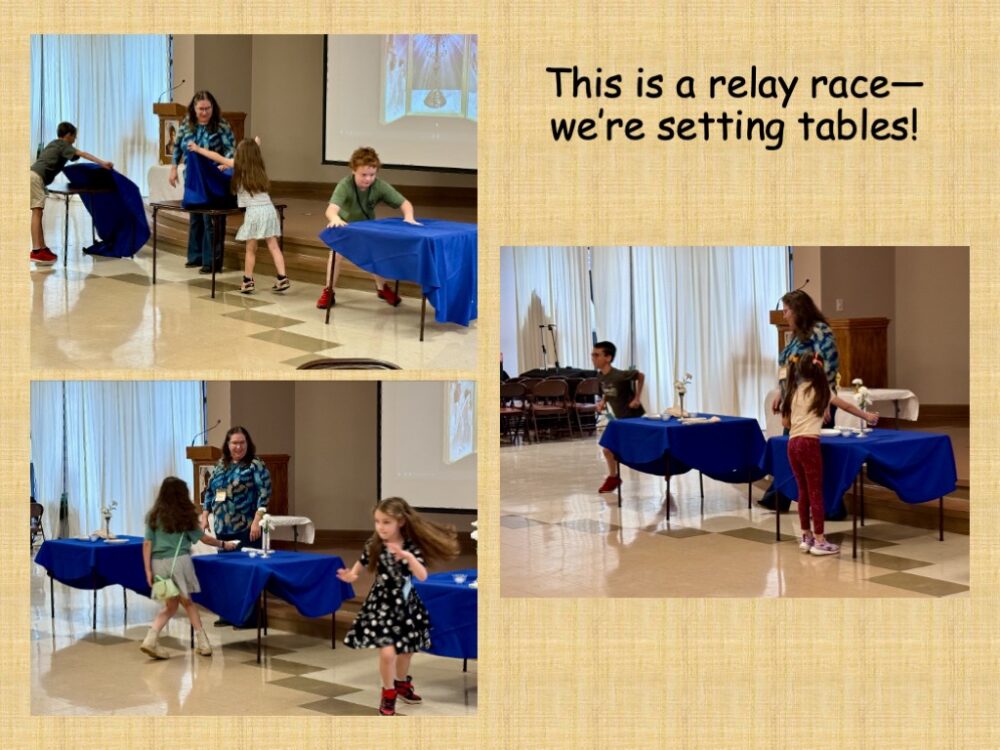
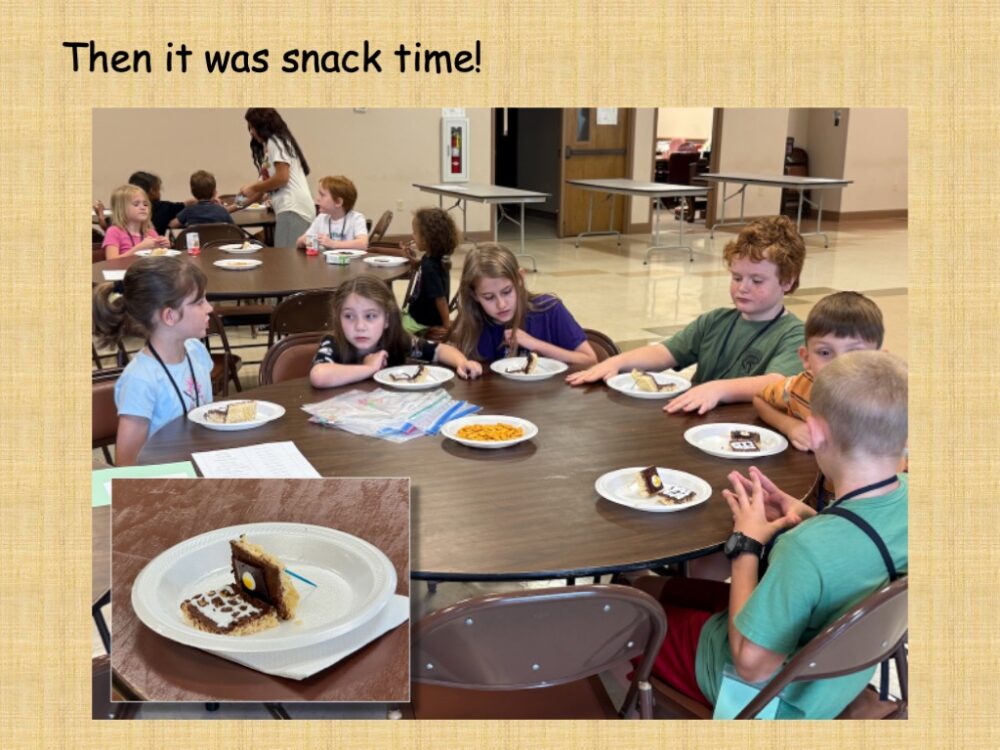
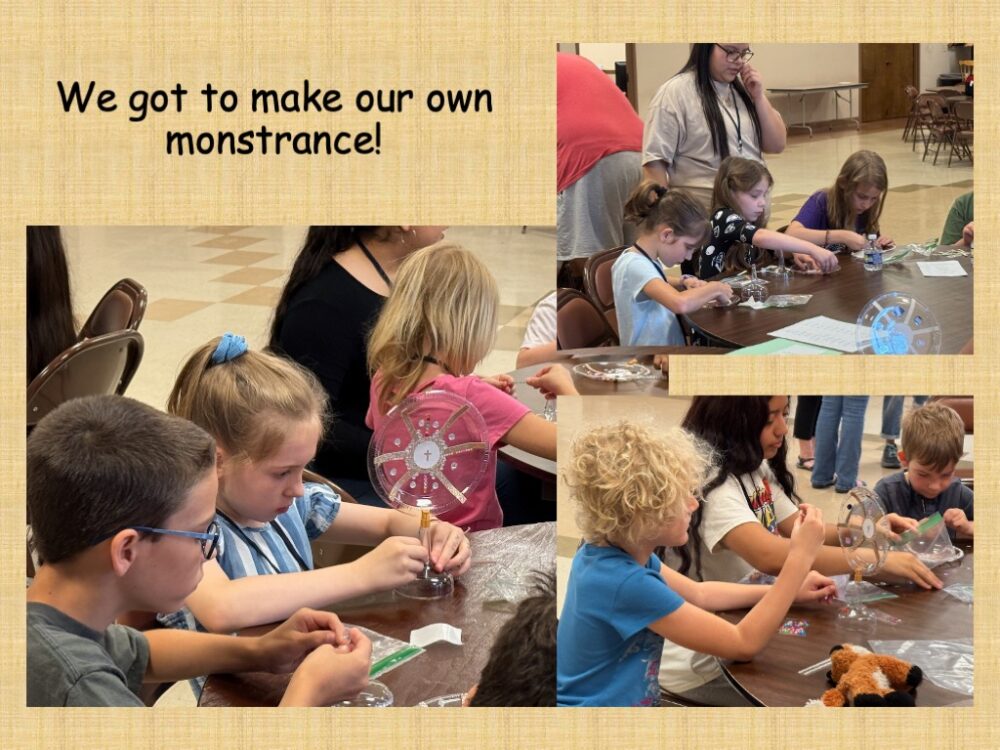
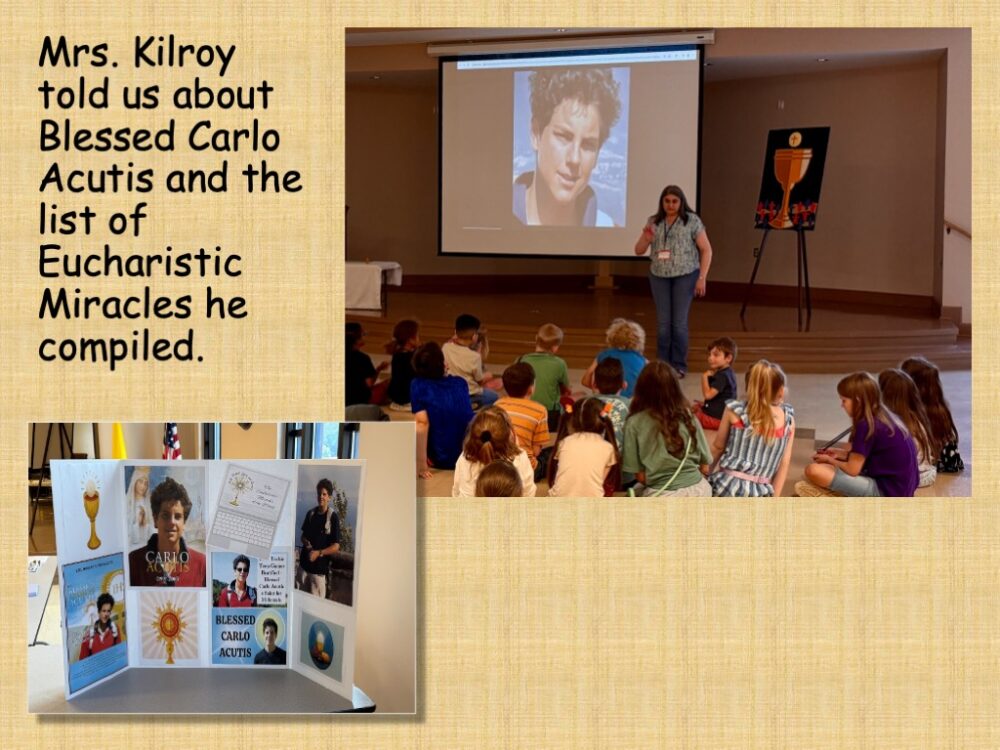
This year, instead of Vacation Bible School, Susan Turner and the DREs of St. Joseph's Church and St. Mary of the Visitation Church decided to have a special day for the kids to learn about the Holy Eucharist in a fun way.

We Shall Hunger for God and for the Life He Offers Us Through Jesus Christ Always!

Jesus’ feeding of the five thousand is the only miracle recorded in all four Gospels. The miraculous feeding of such a great multitude pointed to God’s provision of manna (bread) in the wilderness for the people of Israel under Moses’ leadership. When the people complained to Moses that they would die of hunger in the barren wilderness, God told Moses that he would “rain bread from heaven” for them to eat. The miraculous provision of bread foreshadows the true heavenly bread which Jesus offers his followers who believe in him. Jesus makes a claim only God can make: He is the “bread of life” and the “true bread of heaven” that sustains us now and for all eternity.

Jesus’ feeding of the five thousand points to the superabundance of the Lord’s Supper or Eucharist. In the Old Covenant bread and wine were offered as a sacrifice of thanksgiving to the Creator who made the earth fruitful to nourish and strengthen all his creatures. Melchizedek’s offering prefigured the offering made by Jesus, our great high priest and king who gave a new and distinctive meaning to the blessing of the bread and the cup of wine when he instituted the “Lord’s Supper” or “Eucharist” on the eve of his sacrifice on the cross. Every year in commemoration of the Exodus deliverance, the Jewish people celebrate a Passover meal with unleavened bread as a pledge of God’s faithfulness to his promises. The “cup of blessing” at the end of the Jewish Passover meal points to the messianic expectation when the future Redeemer, the Messiah King will come to rebuild his holy city Jerusalem.

At Jesus’ last supper meal, after he had poured the final blessing cup of wine and had given thanks to his Father in heaven, he gave it to his disciples and said, “Drink of it, all of you, for this is my blood of the covenant which is poured out for many for the forgiveness of sins.” Jesus did this as a memorial of his death, which would take place the next day on the cross of Calvary, and his resurrection which occurred on the third day—Easter morning. The shedding of Jesus’ blood on the cross fulfilled once and for all the old covenant sacrifice of the paschal lamb at Passover time. That is why John the Baptist had prophetically called Jesus the “Lamb of God who takes away the sin of the world” (John 1:29).

Jesus made himself an offering and a sacrifice, a perfect gift that was truly pleasing to the Father in heaven. He “offered himself without blemish to God” and “gave himself as a sacrifice to God.” When we receive from the Lord’s table, we unite ourselves to Jesus Christ who makes us sharers in his body and blood. This supernatural food is healing for both body and soul and strength for our journey heavenward.

The principal fruit of receiving the Eucharist is an intimate union with Christ. As bodily nourishment restores lost strength, so the Eucharist strengthens us in charity and enables us to break with disordered attachments to creatures and to be more firmly rooted in the love of Christ. We shall hunger for the “bread of life” every day of our lives. He will heal us, cure us and keep us as His own always.

God Bless you all.

Fr. Charley

In the Name of the Father, the Son, and the Holy Spirit

The feast of the Most Holy Trinity celebrates one of our most ancient beliefs. We celebrate and reflect on our relationship with God and what our Creator, Redeemer, and Sanctifier has done for us. The scriptures remind us of our God’s graciousness and we rejoice in the God who has acted so mightily and lovingly on our behalf.

The Trinity is not a puzzle. It is a mystery. And those are two very different things. A puzzle has an answer. It is something that you try to figure out, something that you attempt to understand. A mystery has no answer. You cannot understand it because it is greater than you are, something beyond your grasp. You cannot comprehend a mystery, but you can appreciate it. Like a great piece of music it takes you deeper. You cannot solve a mystery, but you can stand before it and allow it to lead you to contemplation. Like beholding a beautiful sunset, it can move your soul. We believe that the Trinity reveals to us the very life of God. This is important because God is the source of all things and so everything that exists is somehow reflective of God, reflective of the Trinity. The Trinity tells us that God is one, that there are no parts and pieces to God.

The Trinity is not a puzzle. It is a mystery, a mystery that applies to us. Let us listen, then, to the call of the Trinity. Let us see in it an invitation to love others deeply and, at the same time, preserve and treasure our own selves. We can find in the Trinity a model for ourselves, a way of loving deeper and of living better.

The most profound mystery of our faith is the mystery we call upon before and after every prayer. We begin and conclude our prayers saying, “In the name of the Father, Son, and Holy Spirit.”

We are not alone. We will never be alone. The Spirit of the Father and the Son has been given to us. Whatever we do, we do with meaning and purpose when we do it with the power of the Holy Spirit. There is nothing that we cannot do when we do it in union with the Spirit of God. When St. Paul wrote in Philippians 7:14, “I can do all things in Him who strengthens me,” he was referring to the spiritual life. Father, Son, and Holy Spirit. He who loves us, He who forgives us, and He who empowers us. We are baptized into the Trinity, into the intimate Life of God. So therefore we shall, as the Children of God, put our trust in the Father, the Son, and the Holy Spirit, and ask them to lead us, guide us, and protect us always.

With love and prayers,

Fr. Charley

Pentecost

The gift of Pentecost—the outpouring of the Holy Spirit and the spiritual gifts and blessings of God—are made possible through the death, resurrection, and ascension of the Lord Jesus. After his resurrection Jesus “breathed” on his disciples and gave them the Holy Spirit. Just as God breathed life into Adam, so the gift of the Holy Spirit is an impartation of “new life” for his people. With the gift of the Holy Spirit a new creation begins. God recreates us for his glory. Jesus’ gift of peace to his disciples was more than an absence of trouble. His peace included the forgiveness of sins and the fullness of everything good.

Just as Jesus was anointed with the Spirit at the beginning of his ministry, so the disciples needed the anointing of the Holy Spirit to carry out the mission entrusted to them by Jesus. The Holy Spirit is given to all who are baptized into Jesus Christ to enable us to live a new way of life—a life of love, peace, joy, and righteousness. The Holy Spirit fills our hearts with the love of God and enables us to grow in spiritual freedom—freedom from doubt, fear, and from slavery to our unruly desires. The Spirit instructs us in the ways of God and guides us in living according to God’s will. The Spirit is the source and giver of all holiness. Isaiah the prophet foretold the seven-fold gifts of the Spirit that would give to us wisdom, understanding, counsel, fortitude, knowledge, piety, and fear of the Lord (Isaiah 11:2).

We shall thank Jesus for sending us the Spirit. We pray to the Good Lord to always make right decisions at the right time through the help of the Holy Spirit. And may our decisions be good for us and for others as well. Let us pray together every day for the Holy Spirit: “Come, Holy Spirit, fill the hearts of your faithful and kindle in them the fire of your love. Send forth your Spirit and they shall be created, and you shall renew the face of the earth. O God, who by the light of the Holy Spirit did instruct the hearts of the faithful, grant that by the same Holy Spirit we may be truly wise and ever enjoy His consolations. Through Christ our Lord. Amen.”

Love and Prayers

Fr. Charley

You Are the Witness of These Things

Jesus gave his apostles both the power and the authority to speak and to act in his name. He commanded them to do the works which he did—to heal the sick, to cast out evil spirits, and to speak the Word of God—the good news of the Gospel which they received from Jesus. When Jesus spoke of power and authority he did something unheard of. He wedded power and authority with self-sacrificing love and humility.

The Lord wants his disciples to be dependent on him and not on themselves. He wills to work in and through each of us for his glory. When we are ready to use the spiritual authority and power which God wishes us to exercise on his behalf, the Lord entrusts us with his gifts and talents.

Actually, in the teaching of the Catholic Church, the parents are the first missionaries, the first catechists and the first teachers to their children. They got this responsibility of first teachers when the child was baptized. They took the oath before God and the church through the minister that they are going to pass this faith to the child.

Many still have the idea that the call of Christ is addressed only to apostles and their successors, the bishops. This is not true today. All of us are called by God to be missionaries, proclaimers, and witnesses to others of His Words. Vatican II document entitled, “On the Apostolate of the Laity” said: “Incorporated into Christ’s Mystical Body through Baptism and strengthened by the Spirit through Confirmation, the laity are assigned to the apostolate by the Lord Himself.” So, whatever your call may be, you are sent out “to preach, heal, teach, and witness to the good news,” in short, to evangelize.

Yes, my dear brothers and sisters in Jesus Christ, make sure in your heart always that you are called to be a Witness for Christ in this world, otherwise known as a Missionary for Christ, called by Jesus to proclaim. It is our responsibility to practice that in our daily lives. Let us pray: Lord Jesus, make me a channel of your healing power and merciful love. Free me from all the attachments of this world, that I may joyfully pursue the treasure of your heavenly kingdom. May I preach the joy of the Gospel both in word and deed. Amen.

Love and Prayers,

Fr. Charley

Accept God’s Will

Balu was a very humble and God-fearing man. He was very knowledgeable about many things in the world. One day while he was traveling along the mountain side, he found a green piece of rock on the side of the mountain. As soon as he saw it, he realized that it was a precious and very costly stone. Balu decided to give that precious stone as a great gift to the king. So, he gave the gemstone as a gift to him, but the King’s advisory team told the king that it was not a gemstone. It was only an ordinary stone and Balu was trying to deceive the king. The King was so angry with Balu that he put him in prison for trying to cheat the king. They cut off his toes as a punishment. Though they tried to punish him cruelly, Balu was not giving up his effort. After a few years, the king died and a new king came in his place. Balu again took the green gem to the new king and presented it to him as a gift. The king called the gem experts and asked them to verify it, and the gem experts said this was the costliest gem in the world. The value of it was huge, and the king was very much taken by that. He called Balu to come to the Palace and receive great gifts he had for him.

As we hear in today’s gospel: Whoever loves me will keep my word and my Father will love him. We shall do everything for the greater glory of God always. Without the knowledge of God nothing will happen to us. We shall always pray that God’s will be done in our lives in all the circumstances of our lives. Accept God’s will and God will help us to do things accordingly.

As Jesus tells us: “For human beings it is impossible, but for God, all things are possible.” Wait for God’s response; the time will come. Do not be afraid. Whatever God’s will is, that will happen to us. It may take time, but surely it will take place. So, do not be afraid about what human beings say. Depend on God’s will. May God bless you all.

Love and prayers,

Fr. Charley

Love One Another as I Have Loved You

During his last supper with his disciples on the eve of his sacrifice on the cross, Jesus speaks of his glory and the glory of his Father. It is the cross which Jesus speaks of here. The cross of Jesus reveals the tremendous love and mercy of God the Father and his beloved Son for the human race. That is why St. John says in his Gospel, “For God so loved the world that he gave his only begotten Son, that whoever believes in him should not perish but have eternal life.”

There is no greater glory and honor that one can offer than the willing sacrifice of one’s life for the sake of another. This is the true nature of love—the total self-giving and free offering of one’s life for the good of another. A mother who loves her child will do everything in her power to nurture, protect, and save the life of the child. A soldier devoted to his country’s welfare will endure any hardship and suffering and willingly sacrifice his own life to defend his people. God the Father showed the unfathomable depth of his love and mercy by willingly offering his only begotten Son, the Lord Jesus Christ, as the atoning sacrifice for the sin of the world. To ransom a slave God gave his only Son. That slave is you and I and the whole human race which is bound in sin and death and separation from God. The Lord Jesus died for our sins to bring us abundant new life in his Spirit and to restore our nature in the true image and likeness of God. God did not create evil and suffering, but through suffering he conquers evil with goodness, truth, mercy and righteousness.

According to St. Augustine, “God loves each one of us as if there were only one of us to love.” God’s love is direct, personal, and wholly oriented to our good welfare and happiness. Adam disobeyed because he listened to Satan’s lie and deceptive promise to glory apart from God. We sin because we love ourselves more than we love God and our neighbor. Only the cross can break the curse of sin and bring full restoration of body, mind, and soul. The cross of Christ sets us free to live no longer for ourselves but for Christ and his kingdom of peace, joy, and righteousness. Our calling and privilege is to serve as Christ has served and to love and he has loved. That is the way we share in the glory of our heavenly Father who gave us his beloved Son who laid down his life for each one of us.

Let us pray: Lord Jesus Christ, your love has no bounds and surpasses everything we could desire and long for. Fill us with the fire of your love and the joy of the Holy Spirit that we may freely serve our neighbors with loving kindness and mercy. Help us to always be a Good Samaritan to others. Amen.

With love and prayers,

Fr. Charley

My Sheep Hear My Voice

Israel’s mission—to be God’s instrument of salvation to the ends of the earth—is fulfilled in the Church. By the “Word of God” that Paul and Barnabas preach in today’s First Reading, a new covenant people is being born, a people who glorify the God of Israel as the Father of them all. The Church for all generations remains faithful to the grace of God given to the Apostles and continues their saving work. Through the Church, the peoples of every land hear the Shepherd’s voice and follow Him.

The Good Shepherd of today’s Gospel is the enthroned Lamb of today’s Second Reading. In laying down His life for His flock, the Lamb brought to pass a new Passover by His blood, freeing “every nation, race, people and tongue” from bondage to sin and death. The Church is the “great multitude” John sees in his vision today. God swore to Abraham his descendants would be too numerous to count. And in the Church, as John sees, this promise is fulfilled.

The Lamb rules from the throne of God, sheltering His flock, feeding their hunger with His own Body and Blood, leading them to “springs of life-giving waters” that well up to eternal life. The Lamb is the eternal Shepherd-King, the son of David foretold by the prophets. His Church is the Kingdom of all Israel that the prophets said would be restored in an everlasting covenant.

It is not a kingdom any tribe or nation can jealously claim as theirs alone. The Shepherd’s Word to Israel is addressed now to all lands, calling all to worship and bless His name in the heavenly Temple. This is the delight of the Gentiles—that we can sing the song that once only Israel could sing, today’s joyful Psalm: “He made us, His we are—His people, the flock He tends.”

St. Cyril of Alexandria explains the People who Listen and those who do not listen to God’s call this way:

The mark of Christ’s sheep is their willingness to hear and obey, just as disobedience is the mark of those who are not his. We take the word ‘hear’ to imply obedience to what has been said. People who hear God are known by him. No one is entirely unknown by God, but to be known in this way is to become part of his family. Therefore, when Christ says, ‘I know mine,’ he means I will receive them and give them a permanent mystical relationship with myself. It might be said that inasmuch as he has become man, he has made all human beings his relatives, since all are members of the same race. We are all united to Christ in a mystical relationship because of his incarnation. Yet those who do not preserve the likeness of his holiness are alienated from him…’My sheep follow me,’ says Christ. By a certain God-given grace, believers follow in the footsteps of Christ. No longer subject to the shadows of the law, they obey the commands of Christ and, guided by his words, rise through grace to his own dignity, for they are called ‘children of God.’ When Christ ascends into heaven, they also follow him.

We shall always be obedient children of God in our day-to-day life and follow Him to Heaven which he promised us.

Love and prayers,

Fr. Charley